
Beautiful Deceiver
Researchers
Sara Seager
Lead researcher
Host(s)
Paul Dalba
Science communicator
The Beautiful Deceiver
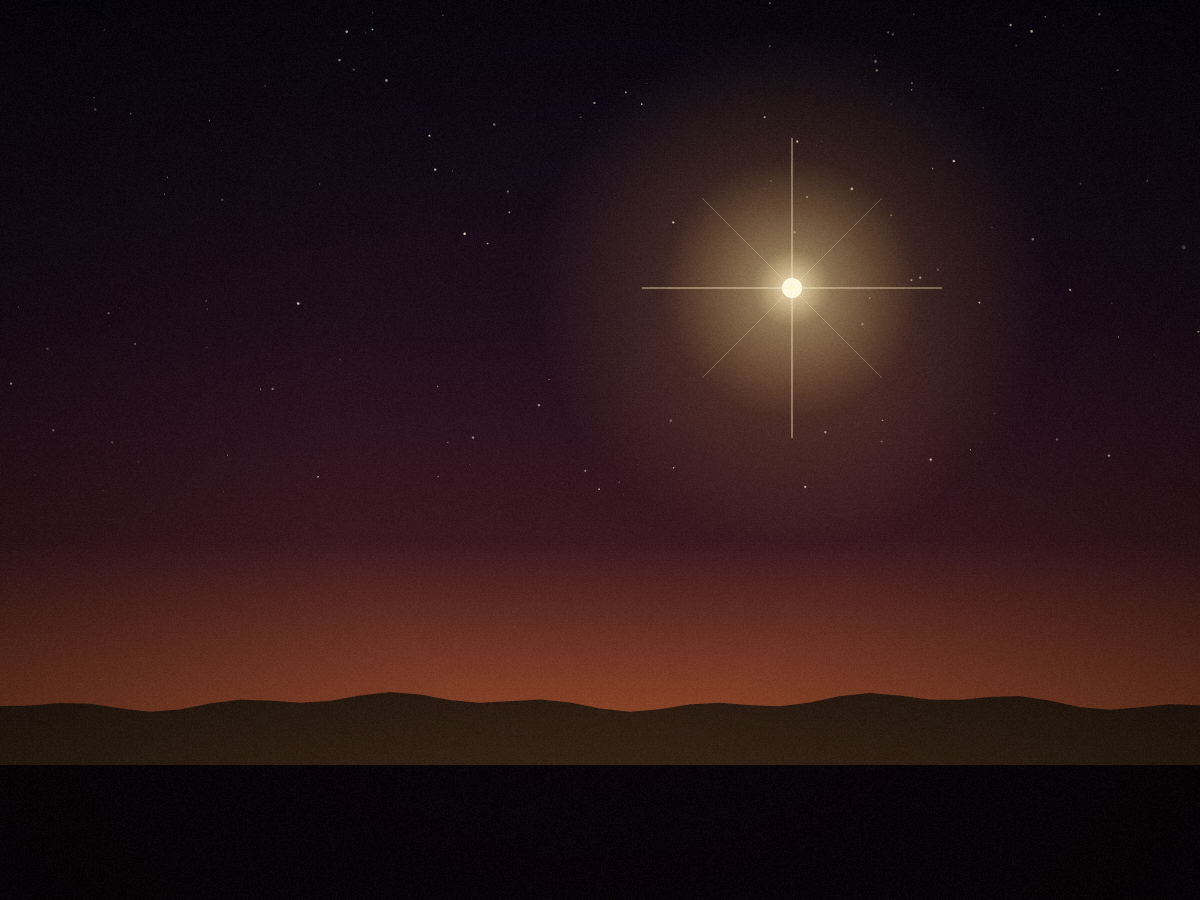
For as long as humans have watched the night sky, one object has stood out—a brilliant point of light so bright it demanded attention. Ancient civilizations tracked its movements and wove stories around it. The Greeks called it Phosphorus when it appeared at dawn and Hesperus when it glowed at dusk. The Romans later named it Venus, after their goddess of beauty. After the Sun and the Moon, it remains the brightest object in our sky, shining strongly enough to cast faint shadows on a moonless night.
Located at a distance of roughly 40 million kilometers away, Venus seems to be Earth's closest sibling: its diameter is about 12,104 kilometers or 7,520 miles (95% of Earth's), its mass is roughly 0.815 times Earth's mass, and both planets share a predominantly silicate mantle surrounding an iron-rich core. Given these similarities, Venus should have developed into a world like our own. However, it has become something entirely different: a harsh and inhospitable planet that scientists often refer to as Earth's "evil twin."
Despite its hellish features, Venus has some peculiar properties that have led several scientists to speculate that Venus could be a habitable world. This is the primary motivation of an ambitious project known as the Morning Star Missions to Venus. This project includes a series of planned astrobiology-focused missions with the main goal of searching for building blocks of life in Venus's cloud cover.
At its surface, Venus is an extreme world. Its atmosphere is composed of more than 96 percent carbon dioxide, creating a powerful runaway greenhouse effect. This traps heat so efficiently that surface temperatures reach about 465 degrees Celsius, hotter than Mercury despite Venus being farther from the Sun. Atmospheric pressure at the surface is roughly 93 times greater than Earth's. These conditions make Venus a planet-sized laboratory for studying climate catastrophe.
Above this hellish surface lies another defining feature: Venus's thick cloud cover that extends from roughly 45 to 70 kilometers (~28 to 45 miles) in altitude. These clouds are made primarily of micron-sized sulfuric acid droplets and are responsible for Venus's high reflectivity, or albedo. The cloud deck is optically thick, causing most incoming sunlight to be scattered and reflected into space before reaching the surface.
This efficient reflection is dominated by Mie scattering, which occurs when particles are comparable in size to the wavelength of visible light. In Venus's clouds, Mie scattering produces strong angular scattering, with a forward-peaked component and extensive multiple scattering that enhances overall reflectivity. As a result, approximately three-quarters of the incoming solar radiation is reflected into space, making Venus shine the brightest in the night sky after the Moon.
Human exploration of Venus began with the Soviet Union leading much of the early effort through its Venera program, which achieved the first successful landings on another planet. Several Venera landers successfully transmitted data from the surface, and confirmed extreme temperatures, crushing atmospheric pressure, and a chemically hostile environment. Most survived only minutes to hours after landing. Later, NASA's Magellan mission used radar to penetrate the cloud cover and map the planet's surface in detail. This revealed vast volcanic plains, massive shield volcanoes, and relatively few impact craters, evidence that Venus may have undergone some processes that may have modified its surface in the past.
These findings made scientists wonder if Venus was once more like Earth? Many climate models suggest that early Venus could have hosted liquid water oceans and a milder climate for hundreds of millions or even billions of years. Over time, increased solar heating and volcanic outgassing may have driven water vapor into the upper atmosphere, where it was broken apart by sunlight and lost to space. Without water to regulate carbon dioxide through geological cycles, the planet may have tipped into an irreversible greenhouse state.
Understanding Venus's past is increasingly relevant beyond planetary science. As scientists discover thousands of rocky exoplanets around other stars, Venus serves as a cautionary example of how planets within a star's habitable zone may still become uninhabitable. Upcoming missions aim to probe Venus's atmosphere, geology, and climate history in greater detail, potentially revealing how Earth avoided a similar fate, and whether Venus ever truly was a sister world before becoming its evil twin.
Comments
Member
May 1
Wow! this is fascinating!
Look up on a clear evening, just after sunset. If you know where to look, you'll see it — a brilliant point of light hanging in the twilight, outshining everything else in the sky except the sun and moon.
The ancient Romans called it Venus, after their goddess of beauty. And for good reason — Venus is stunning. It can be so bright that on a moonless night, it actually casts shadows.
For thousands of years, we looked at that brilliant beacon and wondered what secrets it was hiding behind those gleaming clouds. Well, we found out. And the answer was shocking.
Venus is one of our nearest planetary neighbors, and in many ways, it's Earth's twin — nearly identical in size, just six-hundred-and-fifty kilometers smaller in diameter, with about eighty-two percent of Earth's mass.
In 1918, Nobel laureate Svante Arrhenius, one of the most respected scientists of his time, declared in his book 'The Destinies of the Stars' that Venus was no doubt covered with swamps — filled with abundant life, belonging to the vegetable kingdom.
In the 1960s, we finally sent probes to Venus — NASA's Mariner 2 in 1962, and the former Soviet Union's Venera 4 in 1967. And what they found, it wasn't just unexpected. It was paradigm shifting.
Surface temperatures on Venus reach seven-hundred-and-thirty-five Kelvin. That's four-hundred-and-sixty-two degrees Celsius, or eight-hundred-and-sixty-three degrees Fahrenheit — hot enough to melt lead. Hotter than Mercury, even though Mercury is closer to the sun.
We made a prediction, a reasonable prediction based on the data we had, and we were spectacularly wrong. Now, you might think that's embarrassing, or that it's a failure of science — but I actually think it's one of science's greatest strengths.
Nature doesn't care about our assumptions. The universe is under no obligation to make sense to us, or to fit our preconceptions.
Venera 7 in 1970 finally touched down. It survived for twenty-three minutes before the planet's conditions destroyed it. But it transmitted data — and that data confirmed the nightmare.
The longest-lived lander, Venera 13, survived for one-hundred-and-twenty-seven minutes in 1982. Two hours. That's all we've ever managed on the surface of Venus.
There's this narrow band in the clouds where conditions are downright pleasant. At about fifty to sixty kilometers altitude, the temperature ranges from zero to sixty degrees Celsius — and the pressure is about one bar, exactly Earth's sea level pressure.
In episode two, Paradise Lost, we'll journey back billions of years to ancient Venus — a world that might have been even more habitable than early Earth. And we'll confront the haunting question: if Venus was habitable for billions of years, what happened to turn it into hell?